
Shopper searches the run-together term "bathandbodyworks"
Typing the brand name as one word still returns a mix of official and non-official results, and telling them apart takes about ten seconds if you know what to look for. The corporate entity behind the retail brand is Bath & Body Works, Inc., and its investor-facing site sits at bbwinc.com — useful for company information but not built for placing an order. The consumer-facing brand itself is documented on Wikipedia, which distinguishes the retail chain from the parent company covered separately at Bath & Body Works, Inc.
The shopper-facing purchase channel most searches are actually looking for is the brand's own retail site, bathandbodyworks.com, which is the e-commerce address implied by the run-together query spelling itself and the channel that carries the current catalog, pricing, and order tracking under the brand's own name. That's the address to type directly rather than clicking a search result when the goal is placing an order, since a typed URL sidesteps any lookalike listing entirely.
That split matters because search results for the run-together spelling also surface a mobile app listing and at least one lookalike domain. The Google Play listing is a legitimate purchase and account channel tied to the brand. A separate result, a site calling itself "Shop – Bathandbodyworks," uses a near-identical name and domain pattern but is not the same entity as the corporate, app, or main retail channels listed above — treat any site imitating the brand's name in its domain as a reseller or lookalike until proven otherwise, and check the checkout page's stated seller name before entering payment details.
A simple rule handles most of the confusion: if the domain isn't the brand's own retail site, its own app store listing, or a domain you can verify belongs to the corporate entity, assume it's third-party and shop accordingly.
Reader wants a specific product rather than the brand overview
The assortment is organized into a small number of categories, and picking the category first narrows a broad search into an actual decision. The four groupings that structure the catalog are:
- 3-wick candles — the brand's signature scented candle format, sold across dozens of rotating fragrances
- Hand soaps — the highest-frequency repeat purchase, typically sold in foaming or gel formats
- Body care — lotions, mists, and shower products grouped by the same scent names as the candles and soaps
- Gift sets — bundles that pair two or three formats (candle plus lotion, soap plus mist) under one fragrance name
Because the brand builds most fragrances across all four categories at once, the more useful filter after category is scent family — florals, gourmands (vanilla, sugar, bakery notes), fresh/clean scents, and seasonal releases that rotate through fall and winter lines. Choosing scent family before individual product name avoids scrolling an undifferentiated list, since the catalog repeats the same fragrance across candle, soap, and lotion versions rather than listing unique scents only once.
Reader wants to buy in person
For an in-person purchase, the practical question isn't "does a store exist nearby" but "is the location actually brand-operated and open when you arrive." A store locator built into the brand's own retail site or app is the reliable way to confirm both — it draws on the company's own list of operating locations rather than a general map listing that only confirms a pin with the brand's name attached to it.
Before driving to a location, confirm three things:
- The address matches what the brand's own locator shows, not just a maps listing with the brand's name attached
- Posted hours reflect the specific location's holiday or seasonal schedule rather than a generic assumption
- The listing is described as a full-line store versus an outlet or airport kiosk, since assortment and pricing can differ by format
None of this is guaranteed by a general web search returning the brand name near a map pin — a map pin confirms a location exists, not that it's a company-operated store carrying the full catalog.
Reader is unsure about service quality
Service quality varies enough by store and by order channel that a brand-wide rating tells a reader very little about the specific transaction they're about to make. Aggregated review platforms such as Yelp's brand page collect location-specific and order-specific feedback rather than a single company-wide score, and reading reviews filtered to the exact store or to online-order experiences gives a much closer picture than an overall average.
The distinction matters most for two kinds of problems: in-store experience (staffing, product availability, checkout speed) and order fulfillment (shipping time, packaging condition, return processing). These are handled by different teams and often by different systems entirely, so a complaint about a delayed online shipment says nothing about whether a specific physical store is well run, and vice versa. Filtering reviews to the relevant channel — the specific store's page versus the general online ordering experience — before forming a judgment avoids penalizing (or crediting) the wrong part of the operation.
Retailers that also carry the brand's products, such as the listing on Ulta's brand page, operate under entirely separate service and return policies from the brand's own stores or site, which is a further reason to keep reviews sorted by channel rather than treating "Bath & Body Works" as a single monolithic service experience.
Hand soap
Hand soap is the category most shoppers return for repeatedly, and it's structured differently from the candle and body-care lines because it's built around frequent, small purchases rather than occasional or seasonal ones. The line splits mainly into foaming hand soaps and gel formats, both sold in the same rotating fragrance names used across candles and lotions, so a scent picked for a candle usually has a matching soap version available at the same time.
Because it's a repeat purchase rather than a one-time pick, a few practical points make the category easier to navigate:
- Foaming formats use a pump mechanism that pre-mixes air into the soap, producing a lighter lather that dispenses faster than gel for high-frequency use at a sink
- Gel formats last longer per bottle since they aren't pre-aerated, which suits a household using one bottle for weeks rather than days
- Multi-packs and refill bundles appear on sale cycles more often than single bottles, since the category is designed around stocking up rather than single replacement purchases
Because hand soap turns over faster than candles or lotion, checking which fragrances are currently in stock across the soap line specifically — rather than assuming the candle lineup and soap lineup match exactly at every moment — avoids ordering a scent that's sold out in that format even though it's still available as a candle.
3-wick candle
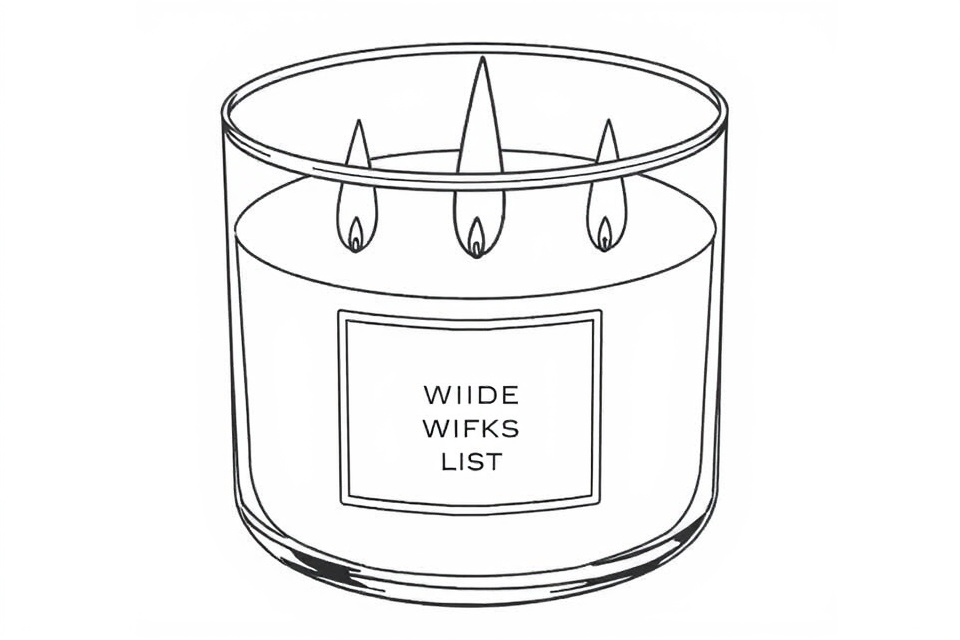
The 3-wick candle is the format most associated with the brand's home fragrance line, distinguished from a standard single-wick candle by the wider, shallower vessel needed to accommodate three separate wicks burning at once. That wider surface area is the entire point of the design: it's meant to throw scent across a larger space faster than a single-wick candle of comparable size, at the cost of burning through wax more quickly per session.
A few practical points apply regardless of which fragrance is chosen:
- Trim wicks before each burn to keep the flame size even across all three and to reduce soot buildup on the vessel's interior wall
- Let the wax pool reach the edges of the container on the first burn, since an uneven first melt can create a "tunnel" that wastes wax on later burns
- Keep burn sessions to a length that lets all three wicks establish an even pool rather than extinguishing early, which can leave one side of the candle unburned
None of this guidance is unique to one fragrance or one release — it applies to the format itself, independent of which scent family the candle belongs to. Because the 3-wick line rotates seasonally alongside the matching soap and lotion versions of the same fragrance, checking which scents are currently offered across all three formats is a faster way to build a coordinated set than searching candle, soap, and lotion pages separately.
Start with the category you actually need — candle, soap, or body care — pick the scent family next, and confirm the channel (the brand's own retail site or app, a verified store locator, or a site you've checked isn't a lookalike) before completing the order.