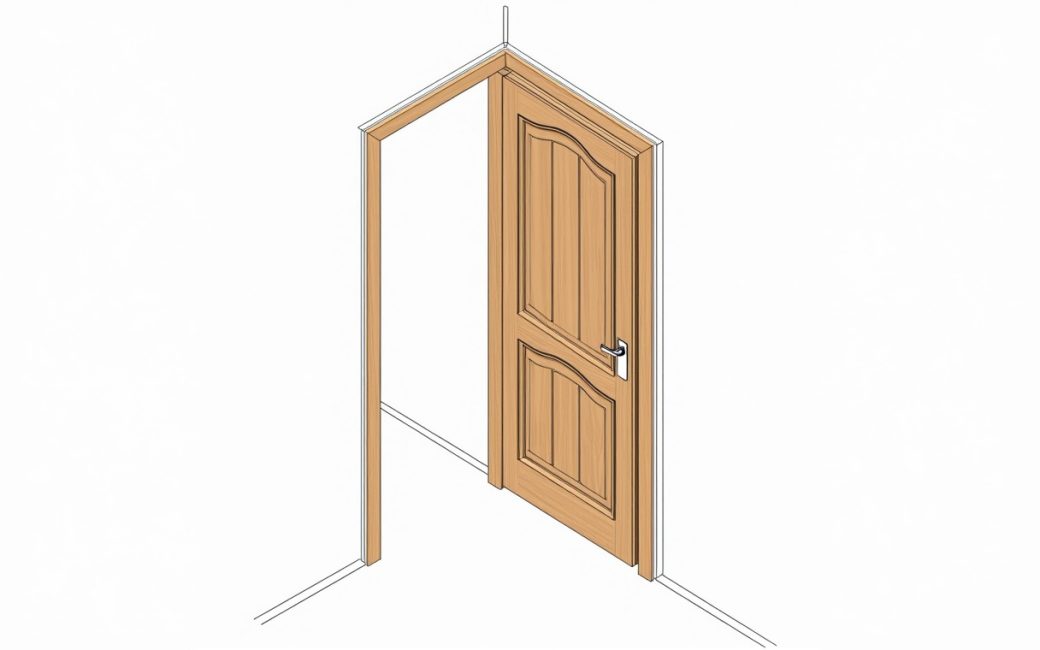
What sets the price of a new front door
A front door's price is set less by its size than by three separate decisions: what it's built from, how it's glazed, and how it's finished. A steel or fiberglass slab in a stock width costs the least because the material and the opening are both standard. A solid wood door in a non-standard size, with sidelights and a stain-grade finish, sits at the other end, because each of those choices adds labor or material cost on its own — they compound rather than simply stack. Therma-Tru and Pella both build across that range, from fiberglass and steel systems to solid wood, which is why comparing their lines is a reasonable way to see where the money goes before pricing a specific door.
Before choosing a style, separate the three variables that actually move the number: construction (solid wood, solid core or an insulated hollow-core system), glazing (glass lites, sidelights, transoms), and finish (paint-grade versus stain-grade). Each is answered independently of the others, and each is answered below.
What a new front door costs, installed
An installed price is never just the door panel — it covers the slab or prehung unit, the frame and jamb, hinges and hardware, weatherstripping, and the labor to set the frame square, shim it, and finish the interior and exterior trim. That bundle is why two doors that look similar in a showroom can carry very different installed totals: a stock-size fiberglass door with a factory-primed finish needs less site labor than a custom-width solid wood door that has to be trimmed, hung, and finished on site.
Rather than a single average, it's more useful to know what pushes a quote up or down:
- Material — steel and fiberglass systems are generally the least expensive to buy and to install; solid wood costs more in both material and finishing labor.
- Size and shape — anything outside a stocked width, or any door paired with sidelights or a transom, moves into custom pricing.
- Glazing — each added lite of insulated glass is priced as an addition to the base slab, not folded into it.
- Finish — a factory-applied paint finish is cheaper to specify than a stain-grade finish that has to be matched to the wood grain after installation.
Because both manufacturers and retailers price these variables differently, the only reliable way to get an actual number is to price a specific door — specific size, material, and finish — rather than to compare listed style names.
Solid wood, solid core, and hollow core
"Solid" gets used loosely in door marketing, and it covers three different things with different weight, sound performance and price.
- Solid wood — a door milled from stiles, rails and panels of real lumber, with no engineered core. It's the heaviest option and holds up to repeated refinishing.
- Solid core — a composite or engineered core faced with a wood veneer or fiberglass skin, close to solid wood in sound and weight but usually less expensive because less finish-grade lumber is used.
- Hollow core / insulated builds — common in steel and fiberglass entry systems, where a foam core sits between skins. These are the lightest and generally the least expensive of the three.
For an interior wood door, the choice usually comes down to solid wood or solid core, since hollow-core builds are rarely specified where sound isolation or weight matters — a bedroom or home office door, for example, is a common candidate for solid wood or solid core rather than a hollow-core panel. For an exterior door, the trade-off is between the durability and refinishing life of solid wood and the lower cost and lower maintenance of a fiberglass or steel skin over an insulated core, which is the construction Therma-Tru builds its entry systems around.
Wood species, if going solid wood
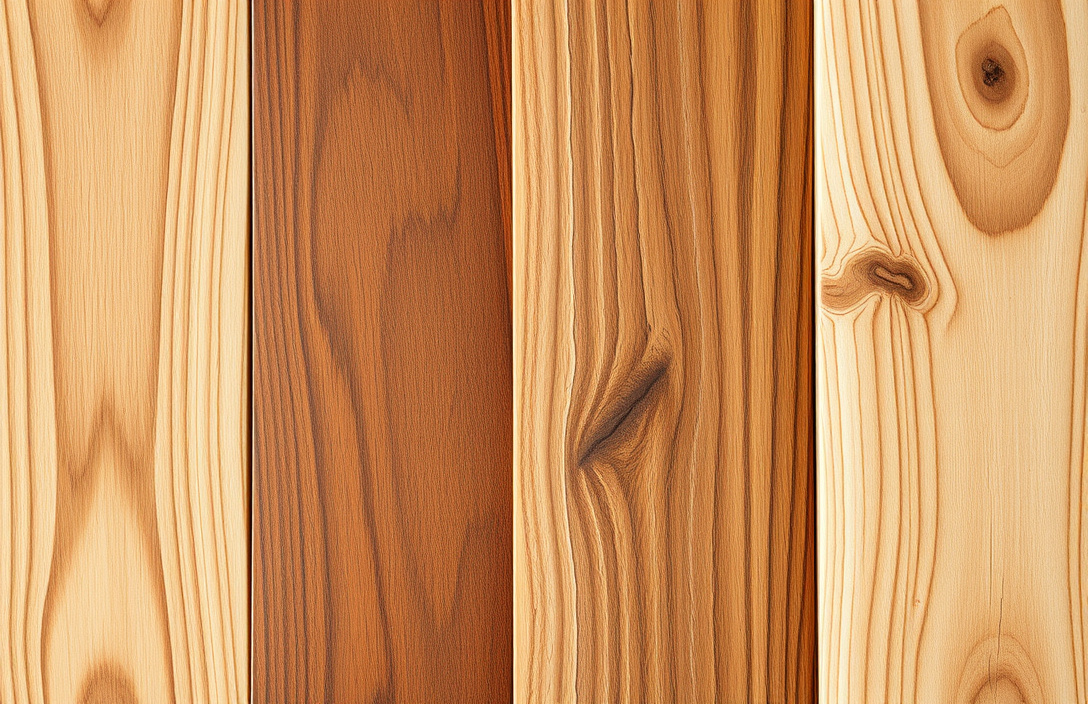
Species selection determines both the finished look and a meaningful share of the price once solid wood is the chosen construction. Grain pattern, density and how evenly a wood takes stain vary by species, and all three affect what a stain-grade door looks like once installed.
| Species | Grain character | Relative cost | Paint or stain suitability |
|---|---|---|---|
| Pine | Soft, visible knots | Modest | Best painted; stains unevenly |
| Oak | Strong, open grain | Mid-range | Good stain-grade |
| Mahogany | Fine, straight grain | Higher | Good stain-grade |
| Walnut | Dark, tight grain | Highest of the four | Stain-grade; rarely painted |
Denser, tighter-grained species like mahogany and walnut typically resist denting better and hold a stain finish more evenly than softer woods, which is why they're specified when the grain itself is the point of the door. Pine is usually the entry point into solid wood, but its knot pattern makes it a better candidate for paint than for a clear or lightly tinted stain.
Panel door faces: raised versus recessed
A panel door is built from a frame of stiles and rails around one or more separate wood panels, rather than a single flat sheet — and how that panel sits in the frame changes both the look and, modestly, the price. A raised panel is milled so the center of the panel sits higher than its edges, giving the door a more traditional, dimensional face; the extra milling adds labor cost over a flat panel. A recessed panel sits below the surrounding frame, giving a simpler shadow line that reads as more contemporary and generally costs less to produce, since it requires less shaping.
Shaker style
A Shaker-style door is a specific version of the panel door: flat panels, square uncarved edges, and no applied ornamentation. It descends from Shaker furniture design and is currently one of the most widely specified interior and cabinet door styles because the flat, square profile suits both painted and stain-grade finishes without the added milling cost of a raised panel. Because the panel is flat rather than shaped, a Shaker door is typically less expensive to produce than a raised-panel door of the same wood and size, which is part of why it appears across price tiers rather than only at the budget end.
Stain-grade versus painted white finish
This is the fork that should be settled before a species or color is chosen, because it determines what's underneath. A stain-grade finish leaves the wood grain visible, so the species, the cut of the lumber and the quality of the joinery are all on display — any filler, patch or mismatched grain will show. This finish only makes sense over solid wood or a wood veneer, and it costs more in both material selection and finishing labor.
A painted white finish — the most commonly specified opaque finish for both entry and interior doors — hides the substrate entirely, which is why it's the standard finish for lower-cost fiberglass and steel doors as well as for lower-grade wood species like pine. If visible grain isn't the reason for buying a wood door, paint is the cheaper route, since it opens the door to less expensive substrates without a visible trade-off.
French doors and other glazing
A French door — a pair of glazed doors, most often used between interior rooms but also seen as a double entry unit — adds cost on two fronts: it's effectively two leaves instead of one, and each leaf carries insulated glass. Andersen covers French and other glazed configurations as part of its entry door style range, and the general pattern holds across manufacturers: any lite, sidelight or transom is priced as an addition to the base slab, not folded into it. More visible glass area brings daylight into an entry at the cost of some privacy and thermal performance compared with a solid insulated panel; decorative or textured glass, offered across most manufacturer lines including Pella's entry collections, recovers some of that privacy while keeping the light.
Slab versus prehung
A slab is the door panel alone, with no frame, hinges or hardware attached — ordered when the existing frame is square, sound and being reused. A prehung unit comes with the door already hung in its jamb, hinges attached and often the lockset bore already cut — ordered when the frame itself is being replaced, which is common for exterior doors given how much wear a frame takes at grade level. Measuring differs between the two: a slab order needs only the door's height, width and thickness, while a prehung order needs the full rough opening — width, height and jamb depth to match the wall's actual framing — because the whole unit, not just the panel, has to fit the wall.
Sizing a non-standard opening
Openings outside the common stocked widths generally move into custom pricing regardless of material. Before assuming a size is non-standard, measure:
- Rough opening width and height — stud to stud and header to subfloor, not the old door's dimensions, since the old door may have already been trimmed to fit a nonstandard frame.
- Wall thickness at the jamb, which sets jamb depth for a prehung unit.
- Swing clearance on both sides, especially where a storm door, sidelight, or tight interior layout limits how far the door can open.
Retailers with broad catalogs, such as Etodoors and Home Outlet, list a wide spread of sizes and styles, which makes them a reasonable place to check whether a given opening falls inside or outside standard sizing before assuming a custom order is required.
Where the buying decision actually sits
Retailers and manufacturers differ mainly in how much of the construction, glazing, and finish decision they leave to the buyer versus how much comes pre-packaged in a fixed system. Manufacturer sites such as Therma-Tru and Pella sell complete systems — door, frame, glazing and hardware engineered together — while catalog sites like Grand Entry Doors and Home Outlet list a wider spread of styles and price points to compare side by side. General home centers and specialty door retailers tend to split along the same lines: broader in-stock selection and lower price floors at the big-box end, more configuration control and higher-end materials at the specialty end. Neither approach is inherently better; the right one depends on whether the opening is standard, which favors a packaged system, or unusual, which favors a retailer with a wider size range.
What to measure before requesting a quote
An accurate quote depends on the same handful of measurements and decisions being settled first, rather than on style browsing. Before contacting a supplier or installer, have the rough opening dimensions, the wall's jamb depth, a decision on slab versus prehung, and a construction preference — wood, fiberglass, or steel — written down. That short list turns a vague style conversation into a specific price for a specific door.